Jennifer Lash and Ralph Fiennes: The Writer-Mother Behind One of Britain’s Most Creative Families

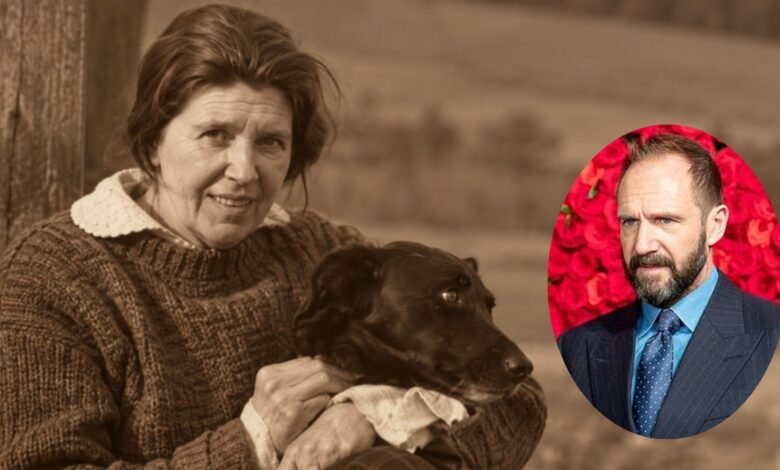
Before Ralph Fiennes became one of Britain’s best-known actors, he was the eldest son of a novelist and painter whose own life was already filled with books, art, upheaval and fierce creative ambition.
The name Jennifer Lash often appears beside Ralph Fiennes because of one central fact: she was his mother. Yet reducing her identity to “Ralph Fiennes’ mother” misses the most important part of the story. Jennifer Lash was an English novelist and painter whose literary career began before Ralph became famous and whose books continued to find readers after her death.
Her story also explains something about the unusually creative Fiennes family. Jennifer, known to friends as Jini Fiennes, and her husband Mark Fiennes raised six biological children, including Ralph, Joseph, Martha, Magnus, Sophie and Jacob, while also fostering Michael Emery. Their constantly changing homes, artistic interests and unconventional education became an important part of the children’s upbringing.
BLUF: Jennifer Lash was an English novelist and painter, born in Chichester in 1938 and later known as Jini Fiennes. She married Mark Fiennes in 1962 and was the mother of Ralph Fiennes. Her novels, paintings and late-life pilgrimage writing established a creative identity that existed independently of her famous son.
Jennifer Lash’s identity becomes clearer once “Jini Fiennes” enters the story
Jennifer Anne Mary Alleyne Lash was born on 27 February 1938 in Chichester, West Sussex. Her father, Brigadier Henry Alleyne Lash, was stationed in India, and Jennifer spent her early childhood there before the family returned to England. She was raised in a Catholic environment and attended the Convent of the Sacred Heart in Tunbridge Wells before continuing her education at Farnham Art School.
Her formal education did not follow a straightforward path. Family difficulties interrupted her studies when she was 16, after which she moved to London and supported herself through various jobs while pursuing artistic interests. That early break from conventional schooling matters because much of Jennifer Lash’s later life was defined by self-directed creative work rather than institutional credentials.
In the mid-1950s, Lash met poet and gallery owner Iris Birtwistle in Surrey. The friendship became a turning point. When Birtwistle moved to Walberswick in Suffolk, Lash followed, and Birtwistle encouraged her to begin writing what became her first novel. Birtwistle also gave Jennifer the name Jini, the name by which she became known to friends and later published some of her work.
Birtwistle also introduced Lash to Mark Fiennes, a Suffolk farmer who would become her husband. They married in 1962, setting in motion the family connection that would eventually make Jennifer Lash a frequently searched name alongside Ralph Fiennes.
Quick profile: Jennifer Lash at a glance
- Full name: Jennifer Anne Mary Alleyne Lash
- Also known as: Jini Fiennes
- Born: 27 February 1938, Chichester, West Sussex, England
- Died: 28 December 1993, Odstock, Wiltshire, England
- Occupation: Novelist and painter
- Husband: Mark Fiennes, married in 1962
- Children: Six biological children, including Ralph and Joseph Fiennes, plus foster son Michael Emery
- Best-known books: The Burial, The Climate of Belief, The Prism, Get Down There and Die, The Dust Collector, From May to October, On Pilgrimage and the posthumously published Blood Ties
1961 gave Jennifer Lash something most celebrity-family biographies leave out: a literary career of her own
Jennifer Lash published The Burial in 1961, when she was 23. The book established her as a young novelist before Ralph Fiennes had even entered adulthood. A surviving first-edition record identifies Rupert Hart-Davis as the London publisher.
The following year brought another book, The Climate of Belief, and also her marriage to Mark Fiennes. Her writing continued across the following two decades, with The Prism appearing in 1963, followed by Get Down There and Die in 1977, The Dust Collector in 1979 and From May to October in 1980. Open Library and British bibliographic records confirm several of these publication dates, while Kirkus reviewed The Prism in 1963.
What is striking about Lash’s bibliography is how frequently its themes circle around belief, family, relationships and emotional conflict. Kirkus described The Prism as a story concerned with spiritual tensions and people’s relationships with belief, while its review of Blood Ties later highlighted Lash’s recurring interest in family dynamics.
That focus becomes especially relevant when reading about the Fiennes household. Jennifer was not writing about an abstract subject. Her own life involved marriage, motherhood, repeated relocations, artistic work and difficult emotional pressures. Her fiction repeatedly returned to the intimate structures of family life that surrounded her.
The woman behind Ralph Fiennes was also the force shaping the household around him
The most important fact for anyone searching Jennifer Lash Ralph Fiennes is simple: Jennifer Lash was Ralph Fiennes’s mother, not a romantic partner or spouse. Ralph was her eldest biological child, born in Ipswich on 22 December 1962, the same year Jennifer married Mark Fiennes.
Ralph was one of six biological children born to Jennifer and Mark. The other five were Martha, Magnus, Sophie, Jacob and Joseph Fiennes. The family also included Michael Emery, whom the couple fostered. Sources describing the family therefore sometimes refer to seven children in total, but six were Jennifer and Mark’s biological children.
The family’s creative output would later become remarkable in its own right. Ralph and Joseph became actors; Martha became a director and writer; Magnus became a composer; Sophie became a filmmaker; and Jacob pursued conservation work. Jennifer’s influence cannot be reduced to a single cause for these careers, but members of the family have repeatedly described their upbringing as deeply shaped by literature, art and encouragement.
Ralph himself has spoken directly about the influence of his mother. In a 2012 interview with The Guardian, he described their relationship in unusually personal terms and said:
“I was very close to my mother.”
He also recalled her insistence that her children should engage seriously with whatever interested them. Her philosophy, as he remembered it, was not simply to participate but to become deeply involved and passionate about the work.
That detail is significant because Jennifer Lash’s relationship with Ralph was not merely biological. She was part of the intellectual and artistic environment from which his early identity developed.
The Fiennes childhood was restless, artistic and far removed from the polished image of celebrity
The adult Fiennes family name can give the impression of old privilege, but accounts from the family complicate that picture. Mark Fiennes was the son of an industrialist and came from an aristocratic family connection, yet he worked as a farmer before later becoming a photographer. Jennifer was a novelist and painter trying to balance creative work with the demands of raising a very large family.
The family moved repeatedly between Suffolk, Wiltshire, London and Ireland. One account in The Observer described Ralph’s childhood as spanning 15 different houses, while later family interviews recalled the financial pressures behind the constant movement.
West Cork became especially important. The family spent time there and eventually built a house near Dunmanus Bay, in County Cork. Jennifer and Mark were drawn to the area partly because of the different kind of childhood they wanted for their children. Their time in Ireland became one of the defining chapters of the family story and later influenced the atmosphere surrounding Jennifer’s writing.
Education also happened partly at home. The younger generation later recalled an upbringing in which reading, art, discussion and creative experimentation were normal parts of daily life. Jennifer’s children have described her as a woman who encouraged them to pursue interests intensely rather than passively.
The timeline that connects Jennifer Lash to Ralph Fiennes
1938 — Jennifer Lash is born in Chichester, Sussex.
Early 1940s — She spends part of her childhood in India because of her father’s posting.
Mid-1950s — Lash meets Iris Birtwistle, moves into the Suffolk artistic circle around Walberswick and begins developing her writing.
1961 — Her first novel, The Burial, is published.
1962 — She publishes The Climate of Belief, marries Mark Fiennes and gives birth to Ralph Fiennes later that year.
1963 onward — The family expands while Lash continues writing, painting and raising the children.
1970s — The Fiennes family spends significant time in Ireland, including West Cork, amid repeated moves and changing work arrangements.
1977–1980 — Lash publishes Get Down There and Die, The Dust Collector and From May to October.
1980s — Her painting remains part of her creative identity while family life continues to shape her work.
1986 — Lash learns that she has cancer and later undertakes a pilgrimage through France and Spain.
1991 — On Pilgrimage is published, documenting that spiritual and physical journey.
1993 — Jennifer Lash dies at Odstock, Wiltshire, aged 55.
1997 — Blood Ties is published posthumously by Bloomsbury; Ralph, Sophie and Joseph Fiennes take part in a Dublin event featuring readings from their mother’s novel.
Illness changed the direction of Jennifer Lash’s writing without ending it
Cancer became a defining part of Lash’s final years. Sources place her diagnosis in the 1980s, and later accounts describe a solitary pilgrimage through France toward Santiago de Compostela in Spain. The journey became the subject of On Pilgrimage, a nonfiction work that moves away from the domestic intensity of her novels toward travel, spirituality and reflection.
The book is important because it shows another side of Jennifer Lash. The search for meaning was not something imposed on her by later biographers; it was part of her own writing. The route incorporated places associated with Christian pilgrimage, including Lourdes, Lisieux and Taizé, before the journey reached Santiago de Compostela.
Her illness did not stop her from working. Her final novel, Blood Ties, remained unpublished during her lifetime and appeared after her death. Bloomsbury’s catalogue identifies the book as a Jennifer Lash novel, while the Open British National Bibliography records a 1997 Bloomsbury edition.
The novel’s subject matter makes the posthumous publication particularly poignant. Blood Ties focuses on parents and children, difficult relationships, rejection and the possibility of reconciliation. Kirkus noted the book’s intense interest in the complicated dynamics of family life.
Ralph Fiennes helped bring his mother’s work back into public view
Jennifer Lash died in 1993, just as Ralph Fiennes’s film career was accelerating. That timing meant she did not witness the full scale of the career that would eventually make her son a household name internationally. In 1997, however, Ralph helped bring attention back to her writing when he appeared at a Waterstones event in Dublin with his siblings Sophie and Joseph Fiennes to read from Blood Ties.
That event matters because it reverses the usual celebrity-family dynamic. Instead of Jennifer being discussed solely as Ralph’s mother, the children were publicly presenting their mother’s work.
The Irish Times reported that people in the audience included individuals who had known Lash when she lived near Bantry in County Cork. The evening therefore connected two parts of her biography that are sometimes separated: the writer whose books were published in Britain and the woman whose family life had deep roots in Ireland.
Her literary legacy has not disappeared. Bloomsbury continues to catalogue Blood Ties, while library and bibliographic records continue to list Lash’s works, preserving a footprint that is more substantial than a celebrity-family search result suggests.
Jennifer Lash’s creative influence is easier to see through the Fiennes siblings
There is a temptation to treat the Fiennes family’s artistic output as a collection of coincidences. The evidence points to something more complicated.
Jennifer created an environment in which writing, painting, music, film and discussion were everyday activities. Her children were not all pushed into acting. Instead, they developed different specialties. Ralph became an actor and director; Joseph became an actor; Martha became a filmmaker; Magnus became a composer; Sophie became a filmmaker; and Jacob pursued conservation.
Martha and Magnus Fiennes later described their mother as a powerful source of encouragement. Magnus recalled her view that almost any occupation could be worthy as long as a person pursued it seriously and did it well. Their recollections suggest that Jennifer’s effect on the family was less about choosing careers for her children than about normalising intense engagement with creative work.
Ralph’s own recollections support that interpretation. He has spoken of his mother’s enthusiasm, her interest in culture and her insistence that the children should not approach creativity superficially.
Expert voice: Ralph Fiennes’s recollections make the strongest case for Jennifer Lash’s influence: she encouraged curiosity, participation and emotional commitment rather than simply directing her children toward a particular profession.
Jennifer Lash’s finances are far less documented than her books
There is no authoritative, independently verified net-worth figure for Jennifer Lash in the sources consulted. Publicly available biographical records document her books, family, exhibitions and later life, but they do not provide a reliable balance sheet, estate valuation or verified personal-wealth figure.
What the historical record does show is that Lash and Mark Fiennes experienced periods of financial pressure while raising a large family. Later interviews with the Fiennes children describe frequent moves and the practical difficulties of supporting six children through careers that did not always provide stable income.
That makes celebrity-style wealth estimates especially inappropriate. Any precise figure presented online without documentary evidence should be treated as unverified.
The real significance of Jennifer Lash sits beyond the phrase “Ralph Fiennes’ mother”
Jennifer Lash deserves attention on three separate levels.
First, she was a published novelist with a body of work stretching from The Burial in 1961 to Blood Ties, published after her death.
Second, she was a painter whose work was exhibited in galleries including the Penwith Galleries in St Ives and venues in Suffolk.
Third, she was a central figure in the cultural formation of the Fiennes family, a point repeatedly reinforced by the recollections of Ralph and his siblings.
That combination explains why the name keeps resurfacing. Searching Jennifer Lash means entering the story of Ralph Fiennes, but it also means going backward into the life of a woman who had already built a creative identity of her own.
People Also Ask about Jennifer Lash and Ralph Fiennes
Who was Jennifer Lash?
Jennifer Lash was an English novelist and painter born in 1938. She was also known as Jini Fiennes after marrying Mark Fiennes in 1962. She published several novels, wrote On Pilgrimage about her pilgrimage through France and Spain, and was the mother of actor Ralph Fiennes and five other biological children.
Was Jennifer Lash Ralph Fiennes’ mother?
Jennifer Lash was Ralph Fiennes’ mother. Ralph was the eldest of her six biological children with Mark Fiennes. He was born in Ipswich in December 1962, the same year Jennifer and Mark married. Ralph has spoken publicly about being very close to his mother and about her influence on his creative upbringing.
Was Jennifer Lash married to Ralph Fiennes?
No. Jennifer Lash was not married to Ralph Fiennes; she was his mother. Jennifer married photographer and farmer Mark Fiennes in 1962. Ralph was their eldest biological child. The confusion comes from searches that frequently place “Jennifer Lash” and “Ralph Fiennes” together because of their family relationship.
What books did Jennifer Lash write?
Jennifer Lash wrote several novels and one major nonfiction pilgrimage work. Her published works include The Burial (1961), The Climate of Belief (1962), The Prism (1963), Get Down There and Die (1977), The Dust Collector (1979), From May to October (1980), and On Pilgrimage. Blood Ties was published posthumously in 1997.
When did Jennifer Lash die?
Jennifer Lash died on 28 December 1993 at Odstock in Wiltshire, aged 55. Contemporary obituary records identify her as a writer and painter and note that she had continued her creative work through years of serious illness.
What is Jennifer Lash’s connection to the Fiennes family?
Jennifer Lash was the mother at the centre of a large Fiennes family of artists and performers. Her children included Ralph and Joseph Fiennes, filmmaker Martha Fiennes, composer Magnus Fiennes, filmmaker Sophie Fiennes and conservationist Jacob Fiennes. The family also fostered Michael Emery.
The legacy Ralph Fiennes inherited was bigger than a surname
Jennifer Lash did not live long enough to see the full cultural reach of Ralph Fiennes’s career. But the surviving record makes one point difficult to ignore: before the Fiennes name became internationally associated with cinema, Jennifer Lash had already spent decades building a life around novels, painting, family and ideas.
Her books provide one legacy. Her children provide another.
The relationship between Jennifer Lash and Ralph Fiennes is therefore best understood not as a celebrity footnote but as a meeting point between two creative generations: a mother whose artistic ambitions took shape in mid-20th-century Britain and a son who later carried that creative inheritance into theatre and film. Ralph’s own words about his mother give the relationship its clearest measure. He remembered closeness, enthusiasm and a demand to engage fully with whatever mattered.
Jennifer Lash died in 1993, but Blood Ties, On Pilgrimage and the memories preserved by her children ensure that her name does not belong solely to Ralph Fiennes’s biography. It belongs to her own.
Sources & Verification
- The Independent — “Obituary: Jini Fiennes” by Anthony Sampson, published 31 December 1993. This is the key contemporary obituary source for Jennifer Lash’s life, publications, marriage and death.
Read the full Independent obituary - The Guardian — “The famous Fiennes”, 2011, featuring Martha and Magnus Fiennes discussing their family and their mother Jennifer Lash.
- The Guardian — Ralph Fiennes interview, 2012, including Ralph’s recollections of Jennifer Lash and her influence on him.
- Bloomsbury — Blood Ties, official publisher catalogue record for Jennifer Lash’s posthumous novel.
- Open British National Bibliography — Blood Ties, bibliographic record confirming the 1997 Bloomsbury publication.
- The Irish Times — “A very Fiennes story”, 1997, documenting Ralph, Sophie and Joseph Fiennes reading from Blood Ties in Dublin.
- Open Library records for Jennifer Lash’s published works, including The Prism, The Dust Collector, Get Down There and Die and other editions.
Editorial Disclaimer
This article distinguishes documented biographical facts from unverified estimates and retrospective claims. No precise net-worth figure has been presented for Jennifer Lash because authoritative financial documentation was not found. Publication dates can vary between original editions, reprints and cataloguing records.


2 Comments